Organic farming: sustainable techniques and solutions
NEWS · 07 January 2026
In recent years, there has been increasing talk of organic farming. The reason is simple: consumers have become more aware of environmental issues, food quality and the impact that farming practices have on the local area.
At the same time, farmers have also come to realise that sustainable production is not just an ethical choice, but also a strategy capable of ensuring better resource management, reducing costs in the long term and increasing the commercial value of their produce.
In this context, our company plays a key role. Our ongoing investment in Research and Development and the numerous patents we have secured demonstrate just how vital innovation is in supporting farmers who wish to adopt organic practices efficiently and professionally.
Below, we explore the principles of organic farming and the main techniques used, focusing on the tools that enable farmers to work in an environmentally friendly way without compromising on productivity.
What is organic farming and what are its principles?
Organic farming is a method of cultivation based on the use of natural processes to maintain soil fertility, promote biodiversity and protect crops without resorting to synthetic chemicals. It is an approach that aims to maintain the balance of the ecosystem and produce healthy, sustainable food.
The key principles of organic farming include:
- the use of agronomic practices that respect the soil’s natural fertility;
- reducing environmental impact through natural pest control techniques;;
- crop rotation to prevent disease and increase soil diversity;
- promoting biodiversity through hedgerows, wetlands and local varieties;
- a focus on the wellbeing of farmers and consumers through products free from chemical residues;
This set of rules and practices not only protects the environment but also preserves the quality and safety of the final product.
Soil management in organic farming: practices and benefits
The soil is the most valuable resource for organic farmers. Healthy, living and balanced soil ensures more stable yields and greater resistance of crops to climatic stress and plant pathogens.
Soil cultivation must be shallow, targeted and respectful of microbial life. Let’s find out what the cultivation stages are and what equipment can be used.
1. Site preparation and seedbed preparation
On organic farms, light tillage methods are preferred, as these leave the soil porous and well-aerated.
The rotary tillers machines can be used when the soil needs to be fine-tilled after a cover crop or green manure.
2. Breaking of the surface crust and levelling
Where the soil is compacted or following heavy rainfall, power harrows break up the crust without turning the soil, thereby preserving the natural soil structure.
Harrows, particularly rotary harrows, are also very useful for lightly incorporating cover crop residues into the soil.
3. Targeted decompression
When deeper tillage is required, subsoilers are preferable to traditional ploughing because they break up compacted layers whilst leaving the surface fertility intact.
This approach is entirely consistent with the philosophy of organic farming.
How to manage weeds in organic farming
In organic farming, chemical weed control is not permitted, so weed management is one of the most significant challenges. For this reason, organic farming relies heavily on mechanical control, which is therefore one of the most widespread and effective techniques, particularly when supported by modern equipment that allows for precision and speed.Weed management through inter-row cultivation
The introduction of electronic guidance systems, which are increasingly common on Zanon machines, enables the machine to maintain precise centring between the rows, thereby increasing safety and reducing errors. The main advantage of this technique is its ability to rapidly curb weed growth, whilst at the same time promoting soil aeration and maintaining a high working speed even over large areas.
Weed management through inter-row cultivation
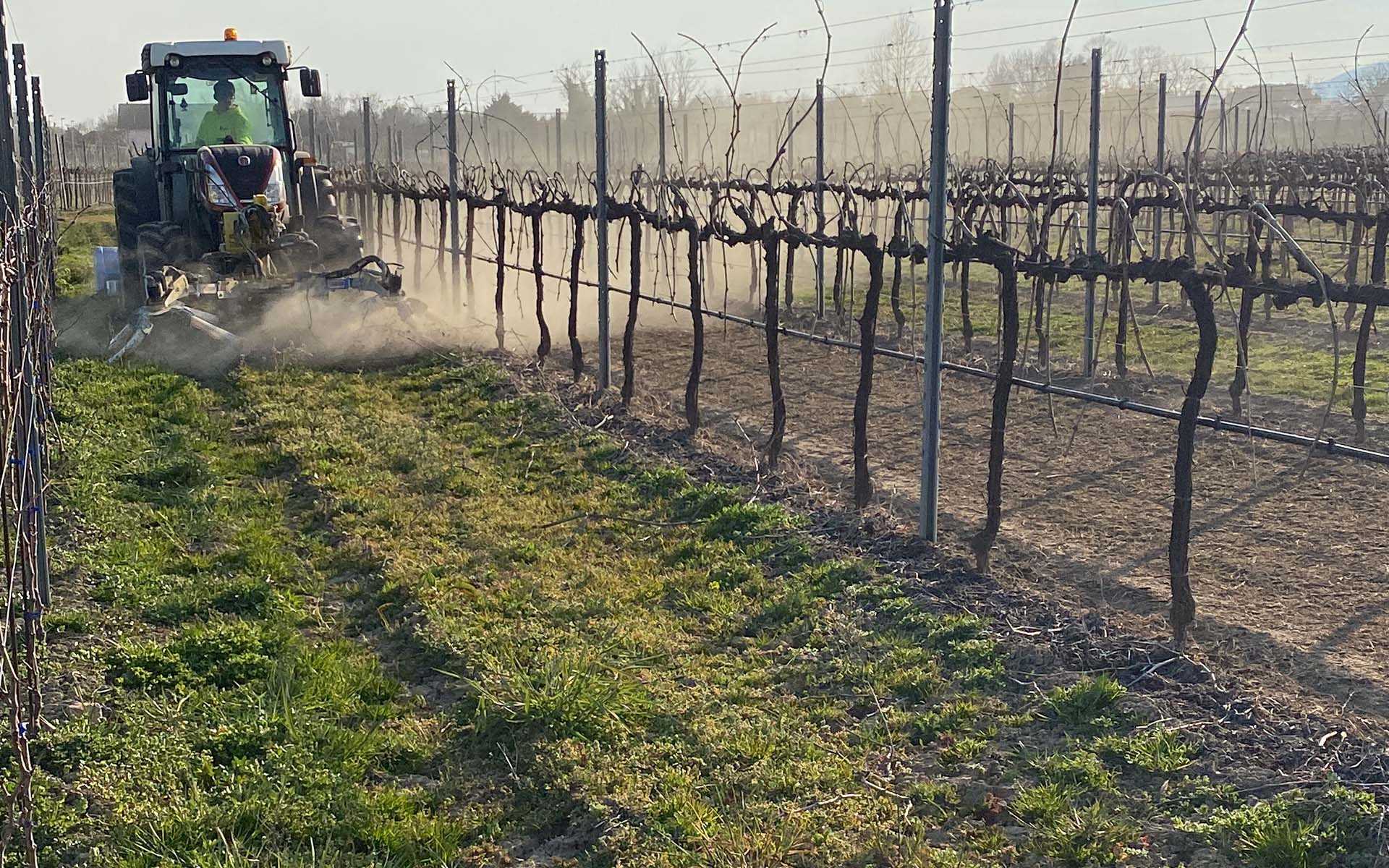
Work carried out along the rows is more delicate, as it takes place very close to the crops. To ensure safety, mechanical weeders are used; thanks to their weeding discs, these do not damage the plants.
This equipment effectively removes weeds growing right next to the row, reducing competition for light, water and nutrients. The most interesting aspect is that, thanks to the anti-collision systems and precision adjustments, the plants remain completely undamaged and can develop uniformly.
Weed management through surface tillage
Surface tillage affects the top few centimetres of soil and is particularly crucial during the early stages of crop development, when weeds are still weak and easily controlled.
Scrapers, flexible-tine harrows and light rotary harrows allow the soil to be disturbed very gently, removing weeds at the white-thread stage and breaking up any surface crusts that would prevent proper aeration.
These implements are complemented by cultivators and harrowing operations, which are useful for superficially remixing the soil, increasing oxygenation and promoting drying after heavy rainfall. This combination of operations helps to maintain a loose and responsive soil, significantly limit weed pressure and operate with low energy consumption, without affecting the deeper soil structure.
Weed management through grass cover
Controlled grass cover is a highly valued technique in organic farming because it allows for the maintenance of a stable grass cover between the rows – whether natural or sown – which contributes naturally to weed control.
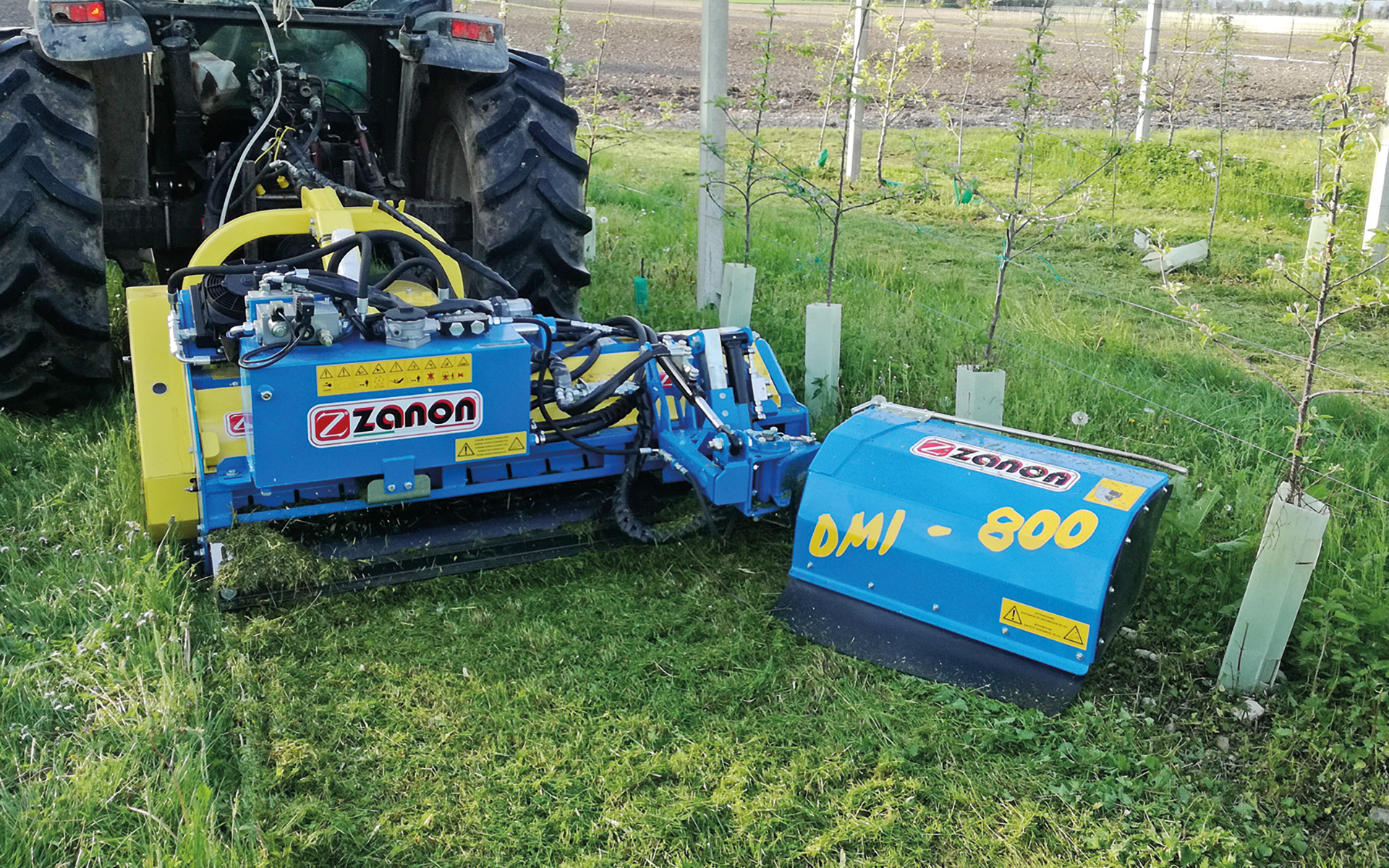
This cover is managed using mulchers, inter-row brush cutters, agricultural mowers and, when the cut vegetation needs to be collected or compacted, also using windrowers.
The latter are particularly useful in situations where you wish to channel the cut grass into neat rows, making it easier to remove or reuse it as organic mulch.
TAmong the complementary strategies, mulching – using organic materials or biodegradable sheets – helps to control weed growth by creating a physical barrier that also reduces water evaporation. Another widely used technique is false sowing, which involves preparing the seedbed a few days in advance to encourage weeds to germinate and then destroying them before the actual planting takes place.
Both techniques, when combined with traditional mechanical cultivation methods, help to further reduce weed pressure during the early stages of crop development.
Organic sowing and transplanting: strategies for effective planting
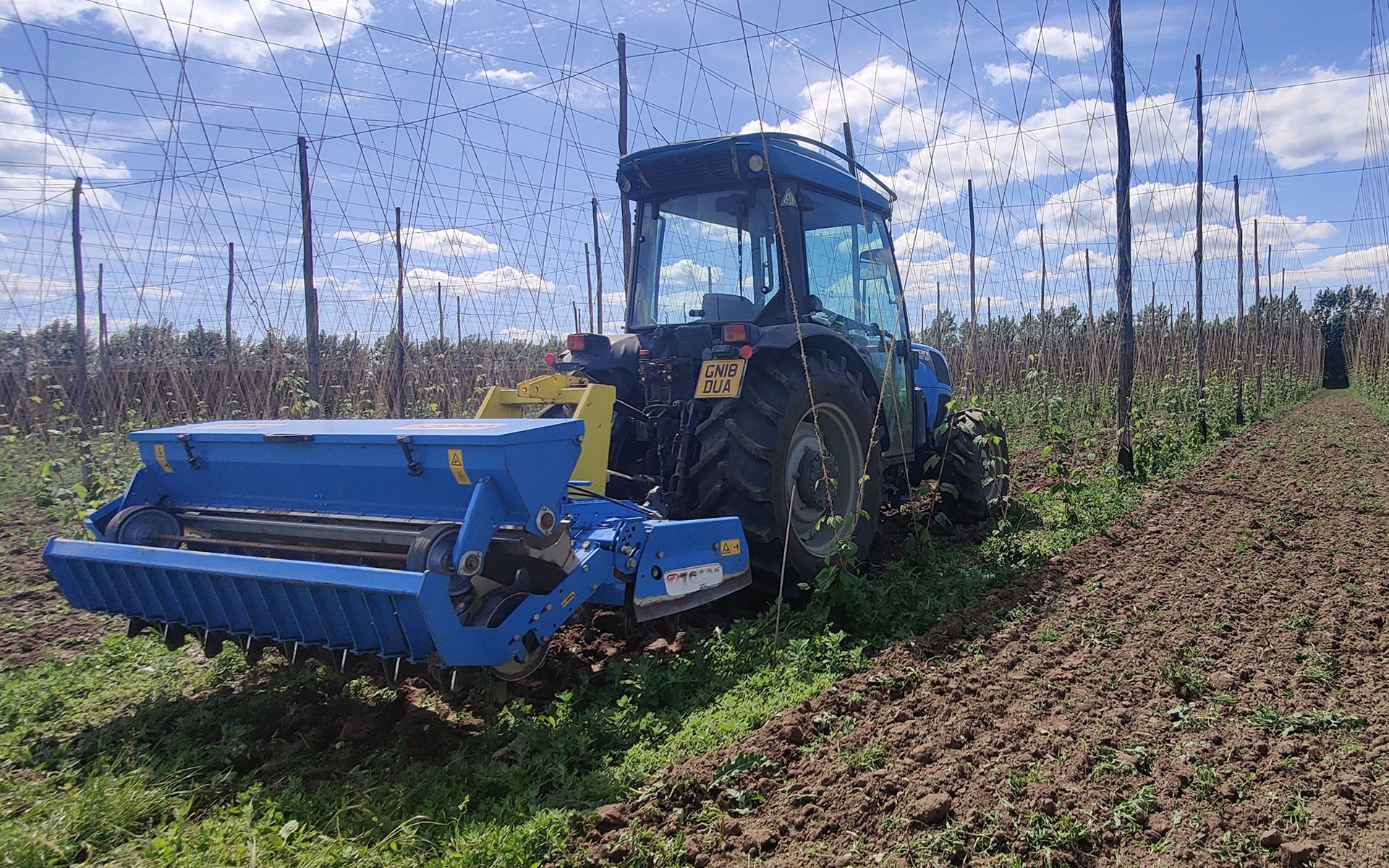
Sowing in organic farming requires great precision: sowing density, depth and the evenness of seed placement directly influence the plants’ ability to compete with weeds and their capacity to absorb nutrients.
Precise sowing is essential in organic farming because:
- it promotes uniform growth,
- it reduces competition from weeds,
- it optimises the use of water and nutrients.
Our seeders ensure regular spacing and consistent sowing depths, creating an ideal environment for germination and minimising the need for subsequent interventions.
Fertility management in organic farming: all the useful organic inputs
In organic farming, soil fertility is built up over time through a combination of techniques designed to keep the soil alive and rich in organic matter. Fertilisation is not carried out using synthetic products, but through soil improvers and natural fertilisers.
The most commonly used materials are:
- compost, rich in organic matter and beneficial microorganisms;
- mature manure, ideal for enriching the soil with nutrients;
- digestate from certified biogas plants;
- rock meal to provide mineral elements;
- legume green manure to increase available nitrogen;
The choice depends on the type of crop, the climate and soil conditions. Applying soil improvers using suitable mechanical equipment improves efficiency and facilitates nutrient uptake.
Proper fertility management helps to increase soil resilience, improve water retention capacity and support balanced crop growth.
The mechanical solutions offered by Zanon enable the efficient application of soil improvers and management of soil tillage, maximising the effectiveness of organic inputs.
Efficient irrigation in organic farming
Water is a precious resource, and in organic farming its management takes on even greater significance. The aim is to ensure the plant’s water requirements are met whilst reducing waste and preventing issues such as waterlogging or erosion.
Among the most widely used techniques are:
- drip irrigation to optimise water use;
- use of soil moisture sensors to determine the best times to water;
- automated water distribution systems;
- mulching to reduce evaporation;
Final thoughts
Organic farming requires a holistic approach: agronomic expertise, planning, knowledge of innovative techniques and the selection of the right equipment.
Machinery such as tillers, harrows, subsoilers, cultivators, seed drills, mulchers, mechanical weeders and inter-row cultivators enable farmers to work in accordance with organic principles, whilst maintaining high levels of efficiency and productivity.
Would you like to find out which Zanon solutions can support you in organic farming, or do you need technical advice?
Contact our network dealers now; an expert will be on hand to help you find the agricultural machine best suited to your needs and to guide you through every stage of the selection process.